Stretching

Str-e-e-e-t-c--h
Str-e-e-e-t-c–h

“But you moved to Africa to be stretched out of your comfort zone,” my friend said. Yeah, but, I thought, I can take only so much change. I wish God would place me in “time out” for a while.

In a few weeks, I’ll be traveling to Tanzania in order to be trained in Rooted in Jesus Junior. As I read through the training manual, I only get more excited about my trip. I’m thrilled and honored that I will be trained in this powerful and transformative discipleship course for older children and young teens and that I will be bringing back this course to South Africa so that we can introduce the course to Sunday school and confirmation teachers. People in South Africa are already asking for training, so it’s quite exciting.

At the same time, I’m a bit nervous about the trip. I will be totally stretched out of my comfort zone, as I travel in rural Tanzania. In a way, I feel as though I will be hurled out of it. This American city girl is about to get the American city girl knocked out her. I will be traveling with a training team from the UK, and we have to bring our own water and loo rolls (toilet paper). In one of the places, we’ll be using something called a “long drop toilet.” (I think I’ll let this one surprise me.) I had to get several inoculations for the trip, and I’ll have to take malaria medicine and sleep under a mosquito net. I have been invited to preach at one of the parishes; and this, in a way, makes me more nervous than anything. Talking with my friend about my anxiety led to the snippet of conversation with which I opened this blog post.

I have no doubt that my trip to Tanzania is going to change me in some profound ways. I keep hearing about how hospitable the Tanzanian people are, and I know that I will be met with some mind-blowing hospitality. I look forward to visiting Rooted in Jesus Junior groups and to meeting the children. I look forward to being trained in the course and to helping out with the training during the second week. I’m praying for God’s direction as I start planning my sermon.

Yes, I’m being stretched out of my comfort zone. Like physical exercise, it is tiring and at times painful; but it is also exhilarating.

Home

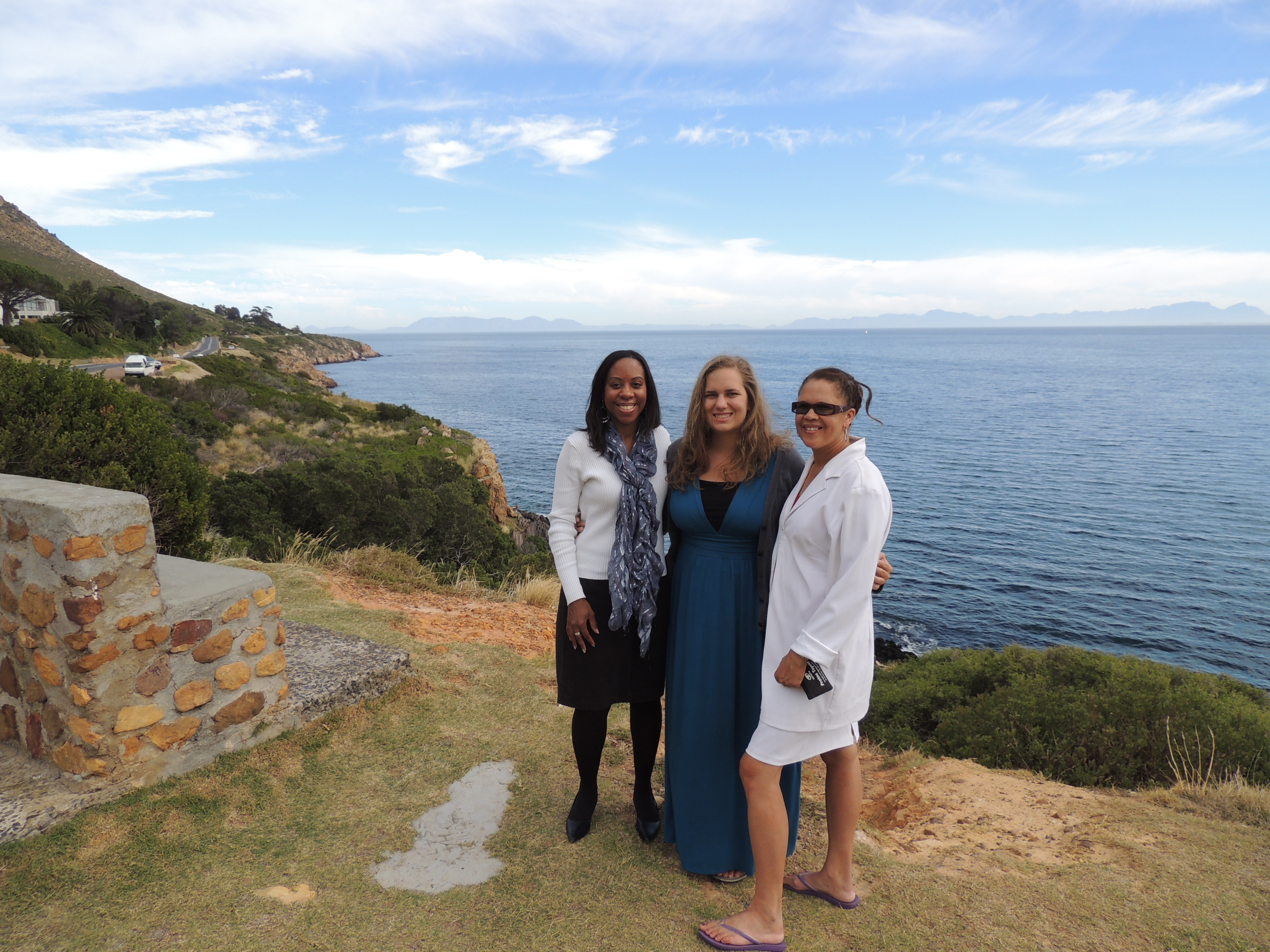
St. James Beach: one of my favorite spots to walk

Yay! Tomorrow I get to go home. I thought as I packed up for the next leg of the recent church trip. On the St. George’s trips to South Africa, we spend our first week in Johannesburg and then fly to Cape Town on Friday. Normally, when I repack for this leg of the trip, I think, I get to go to Cape Town tomorrow! This time I thought, I get to go home. Yay! I miss the mountains and the sea. I miss my flat and my bed. I miss my friends. I miss home.

This line of thinking is a good sign. Cape Town is indeed becoming home to me. However, I was a bit unnerved about this first feeling of home, and I fought against it on the flight to Cape Town and for several days afterwards. Nashville is where my family and friends live; it is where I grew up. It’s home, not Cape Town.

And yet Cape Town is feeling more and more like home, and that’s good—I keep telling myself, although a part of my heart stings. I have had several feelings of “home” during the past month—playing board games on Easter afternoon with the young members of the Adams family, my dear friends, visiting a friend who had a recent operation, routine grocery shopping at the local shops, curling up with a good book on a quiet evening.

Yet it’s ironic; the more I live into life here and the more Cape Town becomes home to me, the more homesick I get for home. I feel the tension. At times it’s intense. At times I want to go home and hug my family. I miss them.

Friends via Nashville Connections

It’s hard living in the in-between of two homes, but I knew it wasn’t going to be easy. It’s a natural part of adapting to cross-cultural living. I look forward to the day when I can call both cities home without an ache in my heart or at least without the intensity of the ache.

As believers in Jesus Christ, living in the in-between is nothing new. It’s what we’re called to do, being dual citizens of heaven and earth. And at times, that type of living is difficult as well. It is also a tension.

I’m praying for the courage to live with the tension.

Reclaiming Ubuntu

Archbishop Tutu DancesLast Thursday, I had the honor and privilege to attend Archbishop Tutu’s Templeton Prize thanksgiving service at St. George the Martyr Cathedral. It was a beautiful and joyful service dotted with amazing music by the Cape Town Opera Voice of the Nation Ensemble. I think all of our hearts leapt when Archbishop Tutu started dancing with the ensemble.

 The archbishop accepted the award on behalf of the people of South Africa, saying it was the people’s award. Then he gave one of the most moving speeches I have ever heard. Speaking from the heart and walking in front of the nave of the church, Archbishop Tutu recounted parts of “the struggle” (South Africans who fought against apartheid refer to their fight as “the struggle”) as he came to the heart of his speech, imploring, “What has happened to us? What has happened to us? What has happened to us? . . . God is weeping.” Speaking of the transition to democracy, the archbishop continued, God was proud of us. He was going to show us off as a people who could live together in harmony despite our cultural differences and as a people who would share with one another what they had. “But what has happened to us?” the archbishop asked, referring to the high level of violence in South Africa, especially violence against women, and referring to South Africa’s dubious distinction of being the number one country in the world with the widest gap between rich and poor.

 As Archbishop Tutu walked in front of the nave, crying out from the heart, “What has happened to us?” I no longer saw him as the renown public figure and global icon of peace. I saw him as a beloved grandfather asking his children and grandchildren, all of us in the service and in South Africa, “What has happened to us as a family?”

The archbishop ended his speech by challenging all of us to reclaim the spirit of ubuntu, which to me can ultimately be summed up with Jesus’ two great commandments: Love the Lord God with all of your heart and mind, and love your neighbor as yourself. If we did this, we would be living out ubuntu.

Archbishop Tutu’s words have challenged me in a profound way, and I am more determined than ever to try to live a life of ubuntu, both here in South Africa and in the States when I return home. Want you join me by accepting the archbishop’s challenge to reclaim (or claim for the first time) the spirit of ubuntu?

The Ministry of Pain

Tea Time
Tea Time

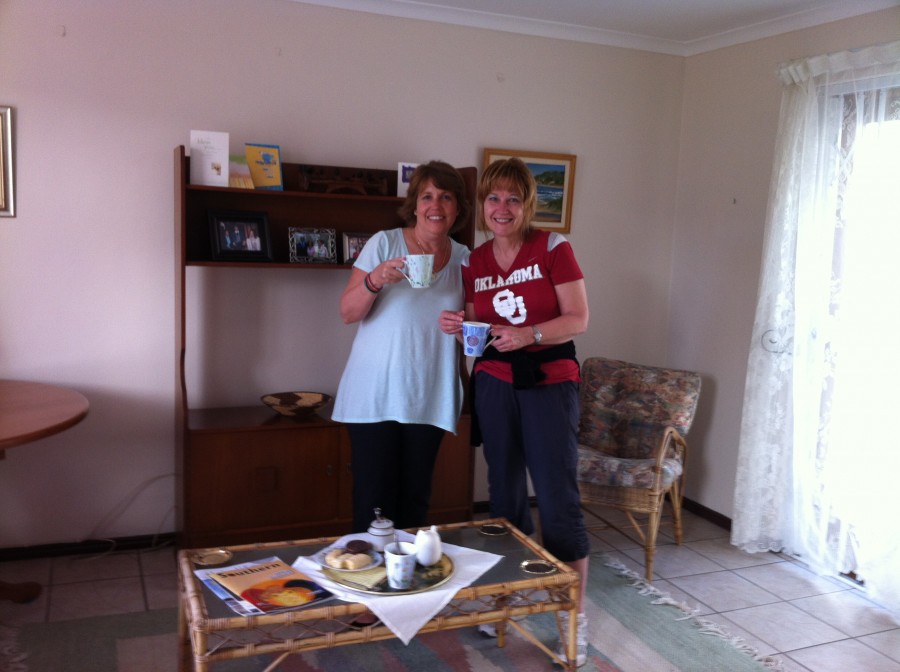
The St. George’s outreach team left on Saturday, and I miss them already. I had a wonderful time being with my St. George’s family in Johannesburg and Cape Town; it was very special to share my adopted country with my church family. I particularly enjoyed the moment when my two good friends Martha and Agatha came over for tea.

In many ways, however, this South Africa outreach trip was the hardest one for me. In Johannesburg, we visited the mother whose house we had helped to rebuild several years ago. Our friend recently discovered that she was HIV positive; the pain was fresh, and she wept in the arms of a mutual friend as she told us how she discovered that she had HIV. On the same day, we had some more sad news. The teenager who was the head of a household we had helped a few years ago was in a downward spiral. The state had taken away her younger brothers and sisters, and her HIV had developed into AIDS.

In Cape Town, we found ourselves in an unfortunate situation that caused a local community leader in an informal settlement to “lose face” among his community members. Although the situation was not of our making, we were not totally without blame, and we sat in silence listening to the community leader express his hurt, the pain etched solidly on his face.

“The ministry of pain” is how I would describe this outreach trip, and it is a ministry we can all learn. In my American culture, we don’t deal well with pain, suffering, or grief. We are taught to “get over it,” “move on,” “rise above it,” “pull yourself up by your bootstraps.” Seeing someone express grief or pain makes us feel awkward, powerless, uncomfortable. We don’t know what to do; we don’t know what to say. I’m a people pleaser, and I like to fix situations; so I particularly struggle in this area. However, with God’s help, I’m learning that it is more important to just be there with someone who is suffering than to say or do anything. The gift of presence is a healing source. It is a lesson that I’m praying to learn so that I can live more faithfully in both my adopted and native countries.

Rethinking Church

ChurchWhat is church? How do we do church; or rather, how should we do church? Is there just one way of doing church, or are there a myriad of ways? I recently started the Fresh Expression of Church’s six-month training course (Mission Shaped Ministry); and after my first class, I have been asking myself these questions.

Sometime ago, Rowan Williams, the former Archbishop of Canterbury, called for a ‘mixed economy’ of church that includes both traditional and fresh forms of church: “Celebrating and building on what is mission-shaped in traditional forms of church and finding ways to proclaim the Gospel afresh to those who do not relate to traditional ways.” And thus the seeds for the Fresh Expression of Church movement were planted. What is a fresh expression of church? It’s a form of church for our changing culture, taking and being the church were people are. Shedding the mindset of the come-to-us type of approach, fresh expression of church says, ‘We’ll come to you.’

My role at Growing the Church is to oversee their youth development and resourcing ministry, and I’m taking the Mission Shaped Ministry course in the hope that it will help us reach out more effectively to young people in ways relevant to their culture.

Adapting

I can hardly believe it, but I have been living in Cape Town for nearly six weeks. Saturday will mark the milestone. All is going well. I continue to work hard on the Anglicans Ablaze study guide booklet. I’m beginning to meet with local and provincial youth leaders so that we can start building relationships. I participated in my first Rooted in Jesus training, and on Saturday I will start the Mission Shaped Ministry course, in the hopes that Growing the Church will have the opportunity to help start a Fresh Expressions of Church at a local university.

 CarOn the home front, I have moved into a lovely flat, opened a bank account, subscribed to an ISP, and started grocery shopping on my own. I bought a car earlier this week, and I’m beginning to drive. (Today I drove on the motorway for the first time!) I am spending a lot of time with my South African friends and getting to know them and their families better. I enjoy this time the most, and I am learning loads about South African culture from them.

I am also beginning to miss the familiar—my family, my friends, my church, food, the shops, Starbucks, an active social life, work that was routine, tennis, kickboxing, walks around my neighborhood, grocery stores with aisles of choices, houses that aren’t gated in with fences and barb wire and locked up with burglary bars, walks in the parks, the freedom to come and go as I please by myself, my puppy-nephew, taxis that abide by traffic rules, words spelled with z‘s and not s‘s.

There are many things that I love about my new culture; others I find rather strange. No doubt my feelings indicate the birth pangs of culture shock, which is just a natural part of the process of living in another country. During my missionary training at MTI, we were warned about the phase of culture shock and were prepped for it. I think being aware of this phase is key and will make going through the process much easier than if I didn’t know otherwise. The most important thing about culture shock is not getting stuck in it. Equally important, I believe, is not blitzing through it, trying to escape the discomfort. I’m praying for the courage to live into the culture shock, to acknowledge the discomfort, to reflect deeply on my home culture and on my adopted culture, to emerge on the other side as a person who can live healthy and happily in both of her worlds.

Modern-Day Disciples

the Rooted in Jesus group
the “Rooted in Jesus” group

I recently attended my first Rooted in Jesus training, and the experience was amazing. On the outset, Rooted in Jesus may look like a simple course in Christian discipleship; but upon a closer look, it is a powerful and meaningful course, equipping Africans in their faith in a context relative to them. These disciples in turn lead Rooted in Jesus groups, making more disciples of Christ. I had the privilege to be one of the team leaders for the training.

There are several things I loved about the training, but what I enjoyed most was the relationships. Among the people I met were three who reminded me of modern-day versions of characters in the Bible. I would like to share their stories with you.

Uncle Peter—The Loving Father
Uncle Peter’s son was a drug addict. Because of his addiction, he lost his wife, his job, his health, his home. For two years he lived in the bush, and his family didn’t know his whereabouts. One Christmas Day he called his parents and asked to come home. Never giving up hope on finding his son and seeing him delivered from addiction, Uncle Peter had been waiting for those very words. Uncle Peter’s son has been clean for several years and has rebuilt his life. Uncle Peter still gets tears in his eyes when he shares his story. He told me, “I know that Jesus Christ is the Lord because I have seen what he has done in my son’s life.” Uncle Peter reminds me of the prodigal son’s father, who was waiting with outstretched arms to receive his son. (Luke 15:11-24)

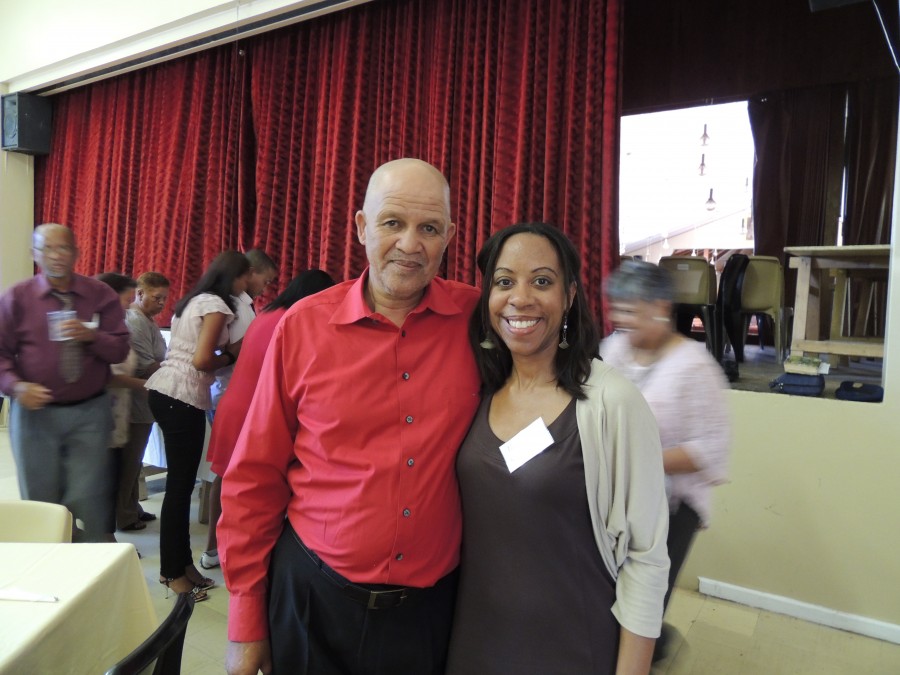
Auntie Rosina and Uncle Peter

Auntie Rosina—Anna
Three months ago Auntie Rosina lost her husband. The pain and grief are still quite real for her. She’s a quiet lady, but I detected an underlying wit, which was quite charming. She has a tender place in my heart, and I would appreciate your prayers for her as she continues to work through the grief of losing her beloved husband. Auntie Rosina reminds me of Anna, the faithful widow in the Bible who was able to hold our infant Lord. (Luke 2:36­-38)

Uncle Jos—Paul

Uncle Jos
Uncle Jos

Uncle Jos was a seaman for 45 years, sailing the world as a fisherman. In his words, he was quite a character back in the day and used to fight anyone who came along. All the other sailors were afraid of him. One day after getting arrested for fighting and having his wife bail him out, Uncle Jos decided to give his life to Christ; and with God’s help, he was able to turn his life around. Uncle Jos’s eyes still well up with tears when he talks about his “misspent youth,” but I think he is able to relate to sailors and to share the love of God with them in a way that most people cannot. Because of his numerous shipwrecks, conversion, and Christian witness, Uncle Jos reminds me of Paul.

*Note: In certain cultures in South Africa, the term “Auntie” and “Uncle” is a sign of respect and affection for older adults.

Connected!

I finally have Internet at home, and I am excited beyond belief! I had to go through loads of paperwork to have a phone line in my name and to get a DSL service provider; but once all those things were in place, it didn’t take long for the companies to get me connected. Yippie!!! Can you tell that I am excited?

Boys Fishing in Gordan's Bay
Boys Fishing in Gordan’s Bay

I have been in Cape Town for nearly a month, and things are going well.  However, during the past few days, the mental stress of settling in has caught up with me. Each day I have spent loads of time trying to get Internet at home, a cell phone, a bank account, and a car. In a normal situation, these things can be time consuming; but as a foreigner, it seems to take triple the time. It can be quite exhausting. Plus, not having Internet at home has made me feel very disconnected from my family and friends. That feeling was definitely adding to my mental stress. I’m thrilled that my family and friends are now just a click away. Thank God for our marvelous technology.

I’m grateful, though, that my friends and colleagues at Growing the Church have helped me with all the settling in items that I named above. I can’t imagine trying to do this on my own. After experiencing such things on the “other side” as a foreigner, I will be much more empathetic and helpful to my international friends when I move back to the States. Moving to another country is truly like starting over. In a way, you have to rebuild your life—establishing yourself and unlearning a lot of things that may work in your home country but not in your adopted country. It is definitely a learning experience and not for the faint of heart.

First Few Days in Cape Town: Highlights

I have been in Cape Town less than two weeks; but in many ways, I already feel like it is home. My colleagues at Growing the Church have become my new family. They are taking such good care of me, and I feel like I have known them for a long time. Trevor, Estelle, Janice, Auntie Joyce, and Mike have welcomed me into their hearts and homes. I am blessed to have them in my life, and I look forward to being a part of their amazing work. In my short time here so much has happened. Here are some highlights:

1. The day after I arrived, Trevor (my boss) and his wife hosted an afternoon tea for me.
2. I started to work on my first project—helping to write and edit some sessions for the Anglicans Ablaze DVD study guide. (Anglicans Ablaze was the big Anglican conference Growing the Church hosted in Johannesburg last October.)
3. I moved into my flat, which exceeded my wildest expectations.
Walking the 5k 4. I walked my first 5K.
5. I went grocery shopping for the first time. It will take me a few more trips to get used to the  different foods and the method of shopping, but I loved buying fresh tropical fruit—mangos, avocados, lechi nuts. Plus, the eggs I bought are farm fresh and don’t have to be refrigerated; there were even a few feathers on the eggs.
6. I went to an afternoon braai (barbeque). My friends Estelle and Thurston braaied yellow tail and snook. Yummy!Estelle and Thurston
7. I learned the basic rules of cricket and rugby. (But I think I have forgotten them now.)
8. I had a lovely Sunday lunch with my friend Ali.
9. I attended Sunday morning service at Christ Church.
10. I bought a duvet for my bed.

Random Reflections on Flight to South Africa

Since I wasn’t able to blog along the way (original flight out Nashville was cancelled and rebooked, making all of my connections tight), below is a compilation of random thoughts and events along the way. By the time you read this, I’ll be in Cape Town.

  • Saying goodbye to my family was the hardest thing that I have done in my adult life.
  • There was a “loud talker” on the Nashville to DC flight. I know waaaay more about that guy than I ever wanted to know. He truly needed to find and cultivate his “inside voice.”
  • Dulles is the worst international airport in which I have traveled. It is so confusing and not user-friendly.
  • Snow was on the ground in DC (hence my flight cancelation in Nashville); it will probably be the last time I see snow in a while. I’m OK with that. 🙂
  • On the transatlantic flight, I had two seats to myself. Yay!
  • I watched “Ice Age” and did some reading, but I slept most of the way to South Africa. I guess I was tired.
  • I’m now in Johannesburg waiting for my flight to Cape Town. I’m burning up. It’s time to shed the winter clothes, but I’ll wait until I get home. I’ll arrive around 11:00 tonight.
  • I met a delightful woman who was in Washington for the inauguration. She lives in Durban and invited me to visit her.
  • I hear children playing and their laughter. Some things are universal and priceless.

It’s great to be back on African soil. I’m blessed to call it home for the next three years.