Balancing Act

Trying to balance ministry, family, me-time, God-time and friend-time is hard. I more or less always feel the tension. Recently, I have felt it a lot and have not responded well.

When I get overwhelmed, stressed, or way out of balance, I get cranky and irritable. My to-do list grows, as I try to control what I can. When I don’t tick off everything on my to-do list, which I rarely do, I feel like I failed. This leads to feelings of guilt that, in turn, leads to more moodiness. It becomes a vicious cycle, and those close to me almost have to be saints to put up with me.

I feel as though I am disappointing a lot of people these days. I am so busy that I have little time to spend with my family and friends on this side and to talk with my family and friends on that side. Last Thursday, I had a stress headache, which is a huge warning sign that I need to slow down and take a break. So instead of going to the gym after work, I came home and watched a musical. I enjoyed it—yet I felt guilty about indulging in a luxury, watching a movie during a weekday. I had supper to cook, lunches to make, clothes to wash—why on earth was I watching a movie?

Guilt

Guys & Dolls, one of my favourite musicals, happens to be about a missionary

I think I am in need of a holiday, a real vacation in which Wayne and I can go away for a while and just relax. In the meantime, I am relieving my stress through musicals, which have become a sort of a mental escape for me. I can totally switch off and sing to my heart’s delight.

I admit: I am an over-achiever, a product of my American-driven culture. Being a missionary has not cured that part of my personality. On the contrary, I have carried that part of me into my ministry, which is not necessarily a good thing. When I don’t see the results that I want to see or expect to see, I feel like I am failing. But who puts that pressure on me? It’s me. I am my own worst enemy.

Why do we do this to ourselves?

In times like these, I try to keep in mind two of my favourite quotations:

God calls us to be faithful, not to be successful.”
–Mother Teresa

Man is born to live, not to prepare for life.”
–Boris Pasternak

I pray, asking God to help me live in the moment and for wisdom on how to put my life back in balance. And I dream about what sort of musical my life would be if I could portray it in song and dance.


Perceptions

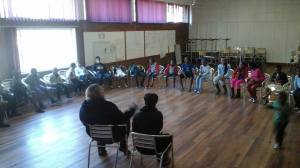
selfie with learners in Afrikaans class @ Heathfield High

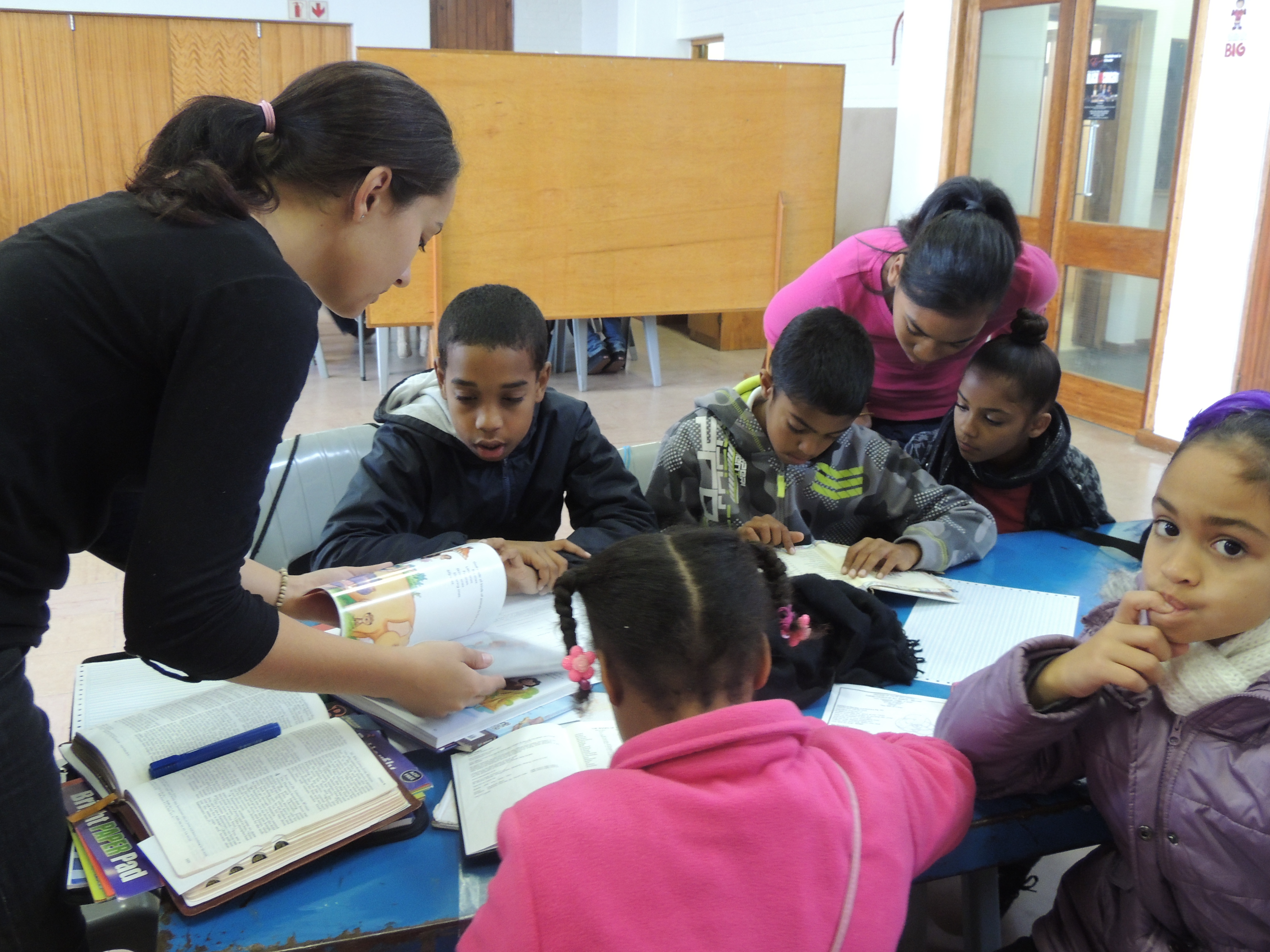
Earlier this week, I spoke at the Heathfield High School assembly, talking about the upcoming Youth Alpha we are going to run in the school. Last Friday, I spoke during chapel at Bishops Diocesan School, encouraging the boys to be open to God’s call on their lives as they make plans that will shape their future. They are two schools from very different worlds—one is in a coloured area, attracting co-ed learners from a primarily low-income background and attracting many African immigrants. The other school is probably the most elite boys’ school in the country; it would be similar to America’s Woodberry Forest School.

I love working with young people in South Africa. I have to admit that I often have an instant “in” with them as soon as I open my mouth. They are so fascinated about America and American culture and often ask me the most interesting and sometimes uncomfortable questions.

Although I have been living in Cape Town for more than two and half years, I am still somewhat dumbfounded over the prevalence of American culture in this country. If you turn on a pop radio station, 90% would be American singers. Reality shows, police dramas, Dr. Oz and the like, and sitcoms from the States dominate TV channels. What’s showing at the cinema? mainly American movies. But what is really sad is that a lot of the entertainment we export here doesn’t paint us Americans in a good light.

Young people often ask me, Is everybody wealthy in America? Do you have any homeless people? Is it really that violent there? Many are shocked to find out that we have homelessness, people addicted to the same drugs that are destroying lives here, and other issues. Many African youth are fascinated with African Americans and our culture. Have you met Jay Z?, a young man recently asked me. Do rappers really dress like that? I love how African Americans speak. I love your gospel music. I often smile. I can relate to some of those cultural questions; others, I cannot. It gets complex.

I think what grieves me the most are shows, such as My Sweet Sixteen and Pimp My Ride. Many youth think it’s not uncommon for Americans to spend $10,000 on a young person’s 16th birthday, and this insane excess is influencing them to pressure their parents to pay a lot of money (sometimes going into debt) for matric balls (similar to the American prom) and 21st birthday parties. I try to explain to young people that these reality shows aren’t real; that’s why these extremes are on TV. Ordinary Americans don’t live like that.

As we live as community, we begin to break down perceptions such as these; and that is one of the beauties and challenges of cross-cultural living.

It’s All About Us

American Flag ID-10047802SA Grunge FlagID-10092404 (1)

“It’s all about us.”

My heart sunk upon hearing those words.

Recently, I had one of those cross-cultural experiences that left me shaking my head in dismay. I was a part of a meeting in which three young American guys wanted to meet with some local Anglican youth leaders to share with them about an upcoming music concert they were organizing and to learn from them about how to attract a more ethnically diverse audience that truly reflects the diversity of Cape Town. (Apparently, when they had their big music concert a few years ago, it mainly attracted white, middle-class young people.) This was how the meeting was pitched to me.

After introductions, the three guys dived right into marketing strategies: How can we get the word out about the concert? Which methods are most effective? The local youth leader guests had a lot of suggestions. After tackling this for nearly an hour, the American guys moved on to dates: What is the best day of the week to hold this concert? Which is best—evening or afternoon? Then they asked advice about what to charge.

When I asked the question about who was on the line-up and if they were using any local talent, one of the guys misunderstood my question, thinking I was referring to local church bands or choirs. No, I replied and pressed on with my inquiry: Are you including any national South African Christian music groups? There are a lot of great music groups in this country. If you want to appeal to a wider audience, you need to consider including South African groups. The three guys seemed stunned. One sputtered out, “Well, it is really all about us.” That’s when my heart sunk. And I thought to myself, Yes, it is really all about you.

I’ll give the guy the benefit of the doubt; I don’t think he meant his words to come out like that. What he was trying to say was that the concert only included their musicians because this concert was a part of a wider movement and they know the musicians with whom they are working. However, it came across to me, to this American who is living and serving in Cape Town, this ethnically diverse city, that the organisers of this music concert already have a plan in mind. They wanted to meet with local people, leaders who could get the young people to come; but at the end of the day, I don’t think they wanted to listen to them or to learn from them.

I went away grieved, shaking my head and thinking, This is why so many people think we Christian Americans are so arrogant. We come to another country to serve; we want to help. We listen nicely to the local population but go along with the plan we have in mind. Because in the end, we really know better and we want to go home feeling good about ourselves.

Perhaps I am being unfair in my reflections, but this has been my experience on a handful of occasions; and it is very painful.

I have made a lot of cultural mistakes since I moved to South Africa. I am still learning, but I honestly believe that I am willing to learn and I think God has given me the gift to be sensitive to others, no matter their culture or background. No doubt, these three guys want to do something good and want to serve the Lord, but they came across as wanting to come with their agenda and to do their own thing and not being willing to listen or to learn. A bit of humility and a listening heart would have gone a long way. I hope at the end of their concert, they won’t find themselves in a similar situation they were a few years ago.

I welcome your thoughts about similar cross-cultural experiences you have had. We can all learn from one another.

(Art credit: “US Flag Stock Photo” by nixxphotography and “Grunge Flag of South Africa” by zdiviv, both courtesy of www.freedigitalphotos.net)

Keeping It Real

One Junior group delves into scripture (All Saints Belhar, Cape Town)

One thing the Rooted in Jesus Junior programme does is encourage children to memorise scripture. The idea is that the Word of God gets off the page and takes root in the child’s heart. Memorising the memory verse is a key element of the Junior programme, and it is one that I like.

Another group's Memory Verse Corner
Another group’s Memory Verse Corner

As a child, I hated to memorise scripture. I used to think, Why do I need to memorise this verse? I have a Bible, or I could ask Mom and Dad. However, the few scripture verses I did memorise as a child have come to mind at times when I really needed them, and I know it was the Holy Spirit using these verses to minister to me. I regret not memorising more scripture, so I can appreciate the importance the Junior programme places on the memory verse; and I strongly encourage Junior leaders not to skimp on this but to make sure each child memorises the verses.

Mom and Dad modeled the importance of knowing scripture and of having devotional time with God. When I was growing up, before school each day, we would have a short time of prayer together as a family, and each week we would have a family devotional time. I hate to admit it; but at the time, I didn’t really value these times together. I was always rushing before school to get ready on time and could have used the extra minute or two. Our family devotional time didn’t take much time, but it seemed to cut into my evening routine. However, I did think it was kind of cool that we had this weekly time together as a family.

Now as an adult, I realise how formational to me were these dedicated times of prayer and scripture reading together as a family. I realise how powerful it was for my parents to pray over me and my siblings each day before we went to school; those prayers of protection, guidance, and wisdom went a long way—more than I will ever know.

When I have a family of my own, I plan to carry on these two traditions of family prayer and devotional time. I plan to teach my children the importance of reading and memorising scripture, as we do it together, keeping it real.

Compassion

SunkissedWhen I told my mom that I thought God was calling me to be a missionary, she wasn’t that surprised and mentioned something about my always having a compassionate heart. She told me the story again about when I was a child, I would always put my coins in the little charity boxes for kids with disabilities, for people fighting disease, or for abused animals.

I do think that God has given me the gift of empathy and compassion, but these traits didn’t develop naturally; they were learned and cultivated. It was my mom who taught me to be compassionate, and it was through her deeds, her lifestyle, and not merely through words.

When I was around 10 or 11, there was a tragedy in our small town. A drunk driver hit and killed a person; I don’t remember the details at all, but I believe it was a young person he killed. This drunk driver became the bogeyman of our town; he was reviled and hated for what he did. Mom’s heart went out to the family who lost their beloved member, but Mom felt God was also calling her to visit the man, this murderer, in jail. She was obedient and did so and started ministering to him in jail. This started my mom’s jail ministry that continues to this day, and my dad joined in years ago too. Together, they have been ministering to inmates in the local county jail for more than twenty years.

In our society that is more or less compassionate and Christian, inmates are a forgotten group and are thrown away. But our Lord loves them just the same, and my mom was opened to being a vessel of this love. It’s not a “sexy” ministry; nobody really applauds those who ministers to people in jail, but it is an important and vital ministry. Did not our Lord tell us not to forget those in prison?

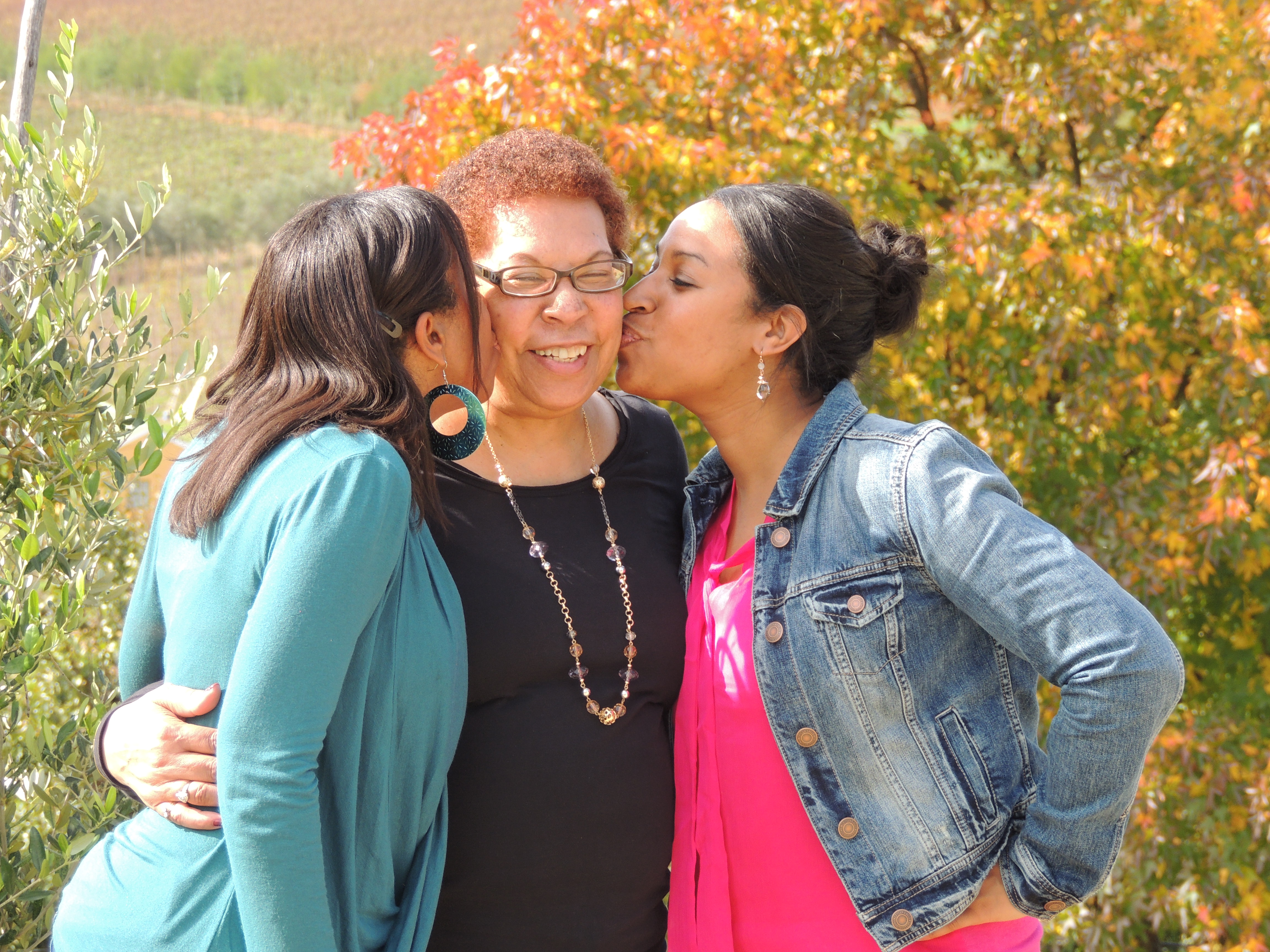
Through mom’s actions long ago and through a lifestyle of giving and showing compassion to others, often to the forgotten of society, Mom has taught me to have a compassionate heart. I still strive to be more and more like Mom in this regard, as I have a long way to go. But I thank you, Mom, for your example of faith, obedience, and compassion.

Praying Pains

Back-in-the-day: Dad & Nicole

It was my dad who taught me to pray. When I was little, Dad and I would kneel beside my bed and pray together, Now I lay me down to sleep. I pray the Lord my soul to keep. God bless, Mommie, Daddy, Phillip, (the twins, when they came along), Grandma, Auntie, Benji (my pet rabbit), Spot (my dog), and a host of other animals and things on my child’s mind. I remember feeling like such a big girl when Dad taught me the Lord’s Prayer.

When I became a teenager, prayer became something I did at church or with my family. Occasionally, I would pray on my own—when I needed something from God. I did not find much meaning in prayer, although my parents modeled a lifestyle of prayer for me.

As a young adult, prayer confused me: How to pray? Does God really hear me? Why should I pray if God knows what is on my mind anyway? Why doesn’t God answer my prayers? At times, prayer made me angry. Why pray, when God doesn’t listen—or even worse, doesn’t care?

In my early 30’s, I went through some bad relationships and some awful break-ups. I was angry. Was I doomed to have a broken-heart? Why didn’t God do something? Didn’t he care? I was annoyed with well-meaning people who tried to make me feel better with comments, such as: God knows what is best for you. Don’t worry, God has the perfect man for you at the perfect time. Maybe God wants you to focus on him right now. Make God the center of your life.

Those comments seem to discount my pain. I was hurting. Where was God in the midst of my pain? Then over the years, three people said some simple things that caught my attention:

Robin, my friend and former boss, assured me that God feels my pain and cries with me. God, my Creator and God, feels my pain and cries with me too? He is present in my pain? Wow. Now this is something to which I can relate, something onto which I can latch.

Fr. Leigh, my rector, said in one of his sermons that God was not despondent to our pain. Seriously, I thought—is that true? God truly cares about my pain? He emphasizes with me?

My friend Agatha once said in a passing conversation (I think with someone else, not me) that she prays to God and expects him to respond—why not? It was like I heard her comment in my mind, saying, Duh. If I pray, why wouldn’t I expect God to answer? She wasn’t saying that God would answer our prayers always with an affirmative but that God would answer our prayers, that we would always get a response. (My mom used to tell me this, but I never listened her. It took a person from outside the family to get this truth across to me.)

Now I am on the other side of young adulthood. Prayer is still a mystery to me. I still don’t get it or fully understand it, but it has become an integral part of who I am. I thank my dad for teaching me how to pray, my parents for modeling prayer for me, and my friends and priest for revealing some important elements of prayer to me.

Reading Time

I can’t remember my life without books. Reading has always been a huge part of me, and I have my dad to thank for that. When I was little, Dad always read to me. Even though I had books of my own, he would take me to the library each week so that I could pick out new books and get used to the smells, stacks and system of the library. I loved our weekly adventure.

Poky PuppyBefore reading a storybook to me, Dad would read me a Bible story. I didn’t like them that much. I found the stories boring, but I would bide my time so that we could get on to the old lady with the house full of rabbits, to The Poky Little Puppy, to Danny the Dinosaur, or to any of the Richard Scary stories. I was patient back then.

But there is one Bible story that I vividly remember; it was about the four friends who brought their paralyzed friend to Jesus for healing (Mark 2:1–12). I remember the blue-striped robe Jesus was wearing, the smile on his face, the four friends digging through the thatched roof to get to Jesus, and the happy faces of all the friends, especially of the one who was healed.

I don’t really know why this story touched me or why I remember it so well. I think in my child’s mind, it was the first time I had an idea of who this Jesus was—he was a happy and caring man. I could go to him; I could take my friends to him. I liked the friends who were so determined and the digging through the roof. This story has always made me happy, and it still does today. Thanks, Dad.

Childhood Reflections

Over the past two months, I have been doing a lot of reflecting on my early life. During Lent, I spoke at my church on the discipleship of children. It was my first such talk on this topic, and I drew a lot from my personal experience as a child.

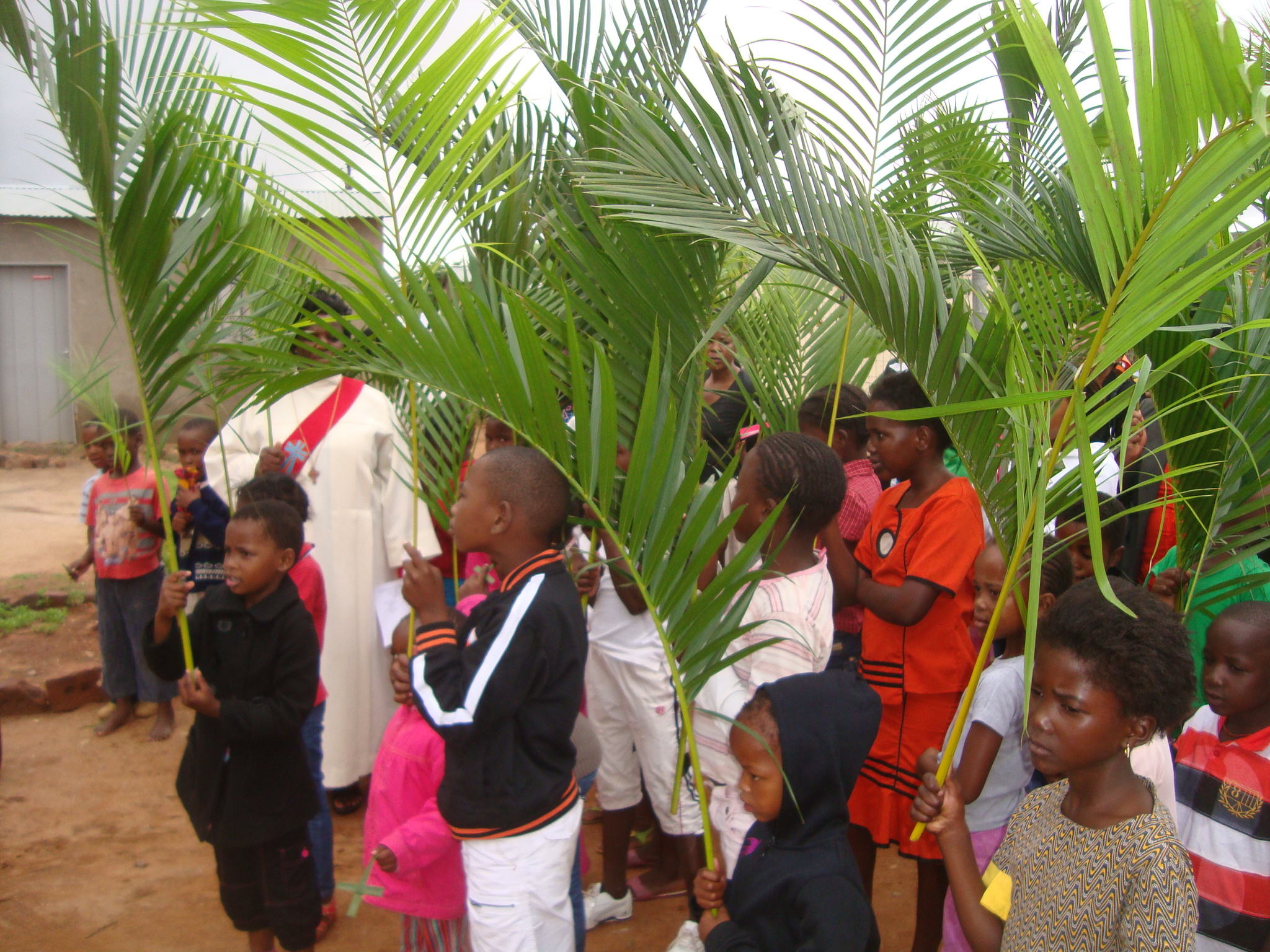
Palm Sunday: Church of the Good Shepherd

When I first moved to South Africa, my role at Growing the Church was to be the youth coordinator, but it quickly evolved into doing children’s ministry as well, as I ultimately became responsible for Rooted in Jesus Junior (a small-group discipleship course for children) in the Anglican Church of Southern Africa. Over the past two years, this has reshaped my attitude towards children and ministry to them.

I am by no means an expert in this area, and I believe that the church in both my countries has fallen short in the discipleship of children. But in reality, discipleship begins at home. I believe that the church should play a secondary role in a child’s faith formation, reinforcing and building upon what a child is already learning at home about God and about living life as a follower of Christ.

Over the next few weeks, I hope to blog about some of my faith experiences as a child and how they have shaped me into the person I am today. I think this will help me to process my reflections and, hopefully, will inspire readers along the way.

Rooted in Jesus Junior: 3 Stories

I have talked a lot about Rooted in Jesus Junior, but there is nothing like hearing personal stories to get a micro view; so I wanted to share a few with you. I met these three amazing people at our recent training for the Diocese of St. Mark the Evangelist in Limpopo.

  • Ouma wanted to be trained as a Junior leader so that she could use the programme in her church’s feeding scheme.
    Ouma as the serpent in Adam & Eve drama
    Ouma as the serpent in Adam & Eve drama

    Her feeding scheme serves 150 children, ranging between the ages of 5 to 18. She wants to use Junior with the children who fall between the 8-12 year-old range.

  • Rendani is the youth leader at the cathedral of Polokwane. During Friday night Youth, many little ones accompany their brothers and sisters to the church or they just come by themselves. Rendani wanted to provide something formative for these children and thought that Rooted in Jesus Junior could meet this need. Rendani started using Junior with the children the Friday after he was trained, and
    Rendani
    Rendani writing memory verse

    he is using it for Sunday school with the children who come on Sunday mornings. He says that the children are enjoying the sessions so much that they can’t wait until the next time they meet.

  • Frank, a teenager who was trained, led one of the best practice sessions I have ever seen. He told me that he had stayed up the whole night preparing, and I believed him! His session was amazing, like he had been leading Junior for months.
    Frank
    Frank in the middle

    No doubt with this passion and dedication, he will make a brilliant Junior leader for the children at his church.


I hope these stories gave you a glimpse into the Rooted in Jesus Junior programme and how it is being used to disciple our children.

11251583_700088233434996_557583677_n
Rendani’s Junior Sunday School Group


A-Team

Recently, I worked with an amazing team of youth leaders to oversee the youth track of the Western Cape Anglicans Ablaze conference. I can’t remember the last time I enjoyed working with such a wonderful group of folks. All of us had different skills and talents, bringing different gifts to the table. It was like God brought us together. We enjoyed being together—even our meetings were fun!

Eleven people served on this team, and together we planned and shaped the youth side of the conference. We had a marvelous array of speakers who spoke on everything from transformative discipleship to overcoming gangsterism. We had

St. Nicholas Band
St. Nicholas Band

two worship bands that provided the music, along with a Marimba band that was a huge hit too. Because we had a deep desire to help young people think differently about worship, we designed something called “creative worship stations,” in which we provided opportunities, facilitated by a leader or teacher in the field, for young people to explore worship through art, dance, spoken word and music.

More than 160 young people attended the conference, and I believe that everyone had a blessed time. I, unfortunately, missed the event because at the same time, I was overseeing another conference in Polokwane. Going into the planning of the youth track, I knew that I would miss the whole thing because I would be overseeing a Rooted in Jesus Junior training in which I needed to be present, being the primary trainer of this small-group discipleship programme for children.

11182299_585612958208301_722576631217646161_nI didn’t find it difficult to put so much work and effort into a conference that I could not attend, but I had wondered how I would feel about letting go of the work and planning and releasing my team into the oversight leadership of the conference. When I left for Polokwane two days before the Western Cape AA conference, I was a bit nervous, wondering how everything would go in Cape Town at the other conference. However, by the next day, I had such a sense of peace. I knew that my A-Team would be just fine. Actually, I knew that they would be brilliant, and I didn’t have a single worry about their leadership. They gave me such a gift to have this peace of mind. And with this gift, I was able to concentrate on my task at hand, the Rooted in Jesus Junior conference.

I am so grateful for my A-Team—for their ministries, for their passion for young people, and for the lessons they taught me about leadership; and I look forward to working with them in the future.

So here’s a big shout-out to my A-Team:
Amanda
Nigel
Wayne
Abigail
Havelyn
Brad
Auriel
Zoltan
Janice
Keegan
Henrietta

You guys are amazing and simply the best!