Remembering

Last night, during a spiritual exercise with my “cell” (small) group, I thought about some people who had played a special role in my life. Who immediately came to mind was my dear friend John Mogabgab, who recently passed away. If you had the blessing and honour to know John, then you know how hard it is describe him, this marvelous man with a gentle spirit and a wonderful wit, a beard like a desert father, a pupil and scholar of Henri Nouwen, and the founding editor of Weavings. Yet, last night, I realised a special gift John and his wife, Marjorie, gave me and that was the gift of listening to God. The two of them, through their contemplative spirituality, showed me through practice and example how to be intentional about listening to God. Although I don’t do a very good job setting aside quiet time to just listen to God, I am grateful for this lovely and essential gift John and Marjorie gave me, and I’m trying to cultivate in my life a pattern of listening.

On another and a very surprising note, I also thought about the math teachers I had in high school and at university. While listening to a friend share about her child’s struggle with math and with the school’s frequent change of math teachers, I realised for the first time in my life how blessed I was to have the math teachers I had. No doubt, my high school and university friends can’t believe what they are reading, as I struggled so much and complained endlessly about math. However, with one exception, all the math teachers I had were good at teaching their subjects and were so patient with me, going beyond the call of duty to offer me special help. Geometry gave me the hardest time, but my teacher regularly tutored

geometryme after school. I don’t even remember his name; it has been that long ago, but I remember his face and his kindness. Honestly, if I didn’t have helpful math teachers, my academic life could have noise-dived; and I could have become so discouraged. Who would have known that twenty-plus years later, I would give thanks for the math teachers in my life?

I continue to live into my life of Ubuntu, as I continue to realise that my “humanity is caught up, is inextricably bound up in yours”—my dear friend John and my math teachers.
 

Helpless But Not Hopeless

I held her in my arms and let her cry. I didn’t know how to pray for her. I couldn’t find the words. I let her cry, and I cried with her.

Let’s call her LeThabo. At the Friday Night Youth Celebration at Anglicans Ablaze, we had a special time of ministry and prayer. I served on the ministry team. A young girl, probably around 15 or 16, came up to me for prayer. “My mother has HIV,” she whispered in my ear, “and we are poor. I’m scared.” And then she broke down in tears. How to pray for her? I thought. I was so overcome with, why, God, why? LeThabo’s story is so common here; she represents thousands upon thousands of South African young people. I prayed for her mom’s healing; I prayed for her and her siblings, but it felt fake. I was so angry. Then I could no longer find the words. We wept together, and I found myself saying to her, it’s OK to cry, just let it all out. God understands your pain and weeps with you.

I felt so helpless as I held LeThabo in my arms, but neither one of us was hopeless. I don’t understand why there is so much pain and suffering in South Africa and in the world. I don’t understand why teenagers, whose greatest concern should be their studies and who should be blossoming into life, have to bear so much pain and responsibility. It doesn’t seem fair; it’s not fair.

At the times when we can’t find the words to pray, we can weep with our sisters and brothers in their pain and trust that God hears our prayers of tears.


Trust in him at all times, you people;

pour out your hearts to him,

for God is our refuge.

–Psalm 62:8


The [Holy] Spirit helps us in our weakness. We do not know what we ought to pray for, but the Spirit himself intercedes for us through wordless groans.

–Romans 8:26


Humility

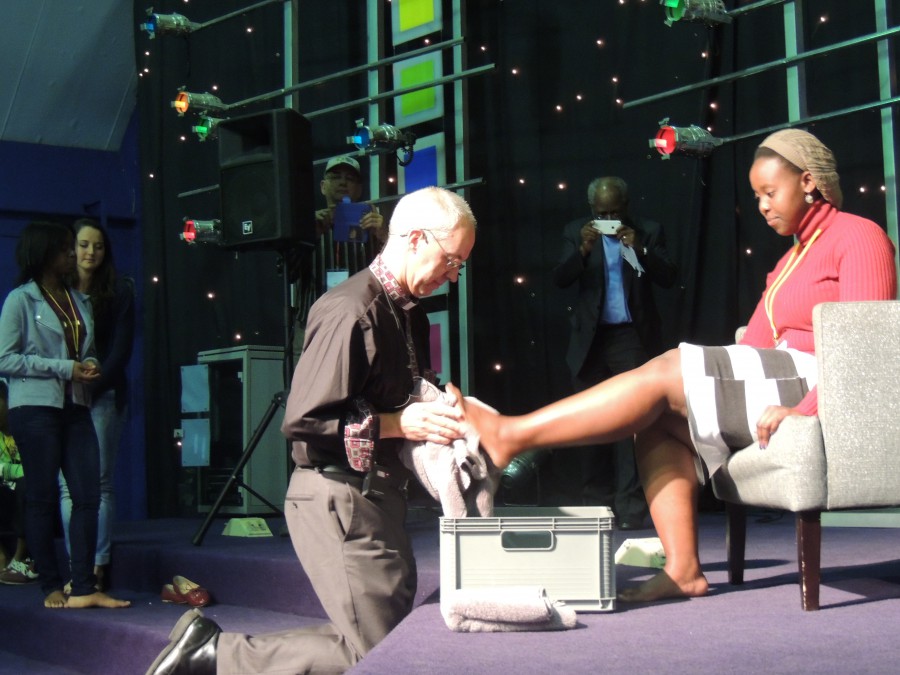
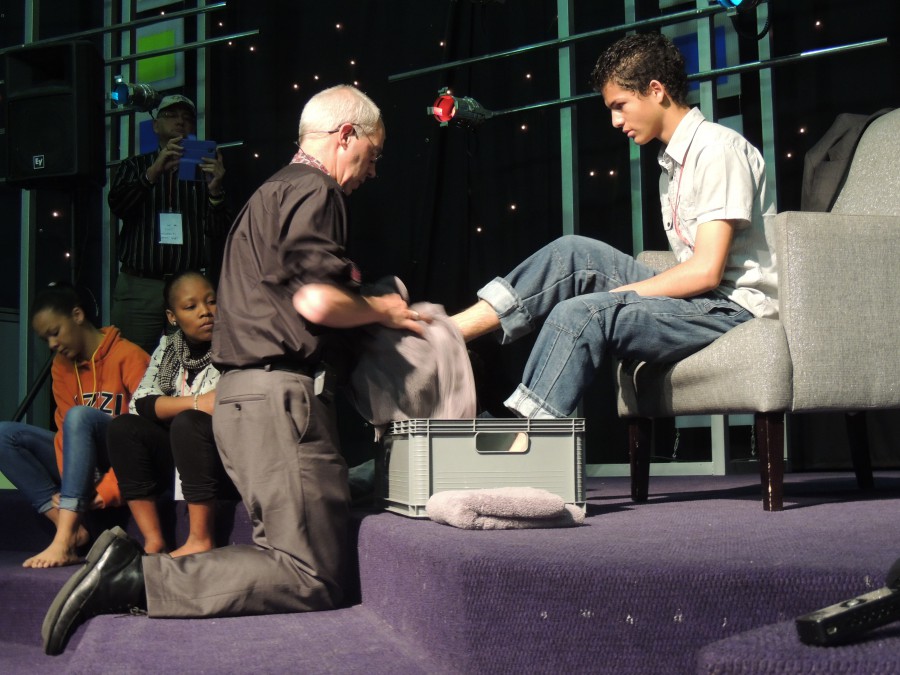
Archbishop Justin He washed their feet. Narrow and wide; male and female; shades of brown, black, and white—12 pairs of teenage feet, he washed. The head of the Anglican Communion, the Archbishop of Canterbury, Justin Welby, got on his knees, gently taking up a pair of feet to wash. Then he blessed the bearer of the feet.

How beautiful are the feet of those who bring good news.

I will never forget this day, when I had the absolute honour of overseeing the hosting of Archbishop Welby when he spoke to the youth at Anglicans Ablaze. His talk was real, vulnerable, relatable, encouraging. He spoke about how God used Paul and Barnabas’ disagreement over the young man Mark, who had deserted them on a mission, for good, helping to spread the Good News and how Paul later “re-commissioned” Mark, requesting his help on another mission. The archbishop tied this to our lives today, reminding us how God can use for good the mistakes we have made. Archbishop Welby also talked about how modern-day society, even himself at times, suffers from the “imposter syndrome”—the fear of having people know who we truly are on the inside, warts, fears, jealousies, muck, insecurities, desires, and all. If people really knew us, they wouldn’t like us.

Then, at the end of his talk, the archbishop washed 12 pairs of feet, demonstrating Christ’s love for his church. There was not a dryArchbishop Justin 2 eye in the room. You could feel God’s presence; it was the presence of love, nearly tangible, like a cloud. Archbishop Welby’s action was the act of love and a servant spirit. It was humility incarnate. I could sense God saying to us all, Go and do likewise.

Youth Day

Today is Youth Day. A day when South Africa stops and remembers the role that youth played in the struggle against apartheid, in particularly the Soweto Uprising of 16 June 1976, in which 13-year-old Hector Pieterson was one of the first victims. Also on this day, the country celebrates the role that youth play today in South Africa. I think it is cool that the country has set aside a special day to celebrate its young people.

I’m often asked what similarities and differences I see in the state of young people in South Africa compared to the U.S. Honestly, in a way, it is hard to compare. Many times it comes down to class, as it does in the U.S. The biggest difference I see is that the young people of South Africa face so many difficult situations, some near impossible, such as being the head of their families because of their parents’ death, than the youth in America; and unlike American youth, they don’t have the resources to help them cope. For example, in the States, there are so many resources—counselors, therapists, non-profits, churches, social warefare programs, so forth—available for young people to access, whereas here, there is a huge lack of resources. Most of the schools, such as the one in which I recently worked, don’t have a single counselor on staff. The lack of resources is one of the hardships of a developing country, such as South Africa.

And South Africa, like the U.S., tends to do a lot of complaining about its young people—the lack of respect, laziness, failure to commit, having a sense of entitlement. What’s new? Doesn’t each generation complain about the upcoming one? My generation was given the infamous misnomer of “Generation X.” What was fair about that?

Alpha Group
Alpha Group

But I don’t want to end on a sour note. I think there is a lot of good to celebrate in the young people of South Africa, as in the States. If I think about the young people I have had the privilege to get to know in South Africa, I feel encouraged, seeing a bright future for this country. I feel particularly blessed to have had the opportunity to lead a Youth Alpha course at a local high school. For each session, we had an average of 42 students. These students were committed, engaged, inquisitive, bright, compassionate, and fun-loving. I truly believe that many of them will go on and do great things for their local communities and for their country; I think God has a special plan for many of them–well truly, he has a special plan for all of them. I just had the sense that I was in the presence of some very special young people, and it was a huge gift to me.

So today, whether if you live in South Africa or in the States (or in another country), be sure to tell at least one young person how special he or she is, encourage that young person, let him or her know that you believe in him or her. One simple but sincere word of encouragement can go a long way.

Hello’s and Good-bye’s

One of the hardest things for me in my new life and ministry is dealing with all the hello’s and good-bye’s. The hello’s are great. The good-bye’s are hard.

Picking up my mom and sister at the airport= wonderful, exciting, beautiful, priceless
     Taking them back to the airport= tearful, sad, a feeling of loss

Running the Youth Alpha course at a local high school= connection, bonding, joy, relationship
     End of the Alpha course=sadness, loss, wondering if I would see most of the students again

Conducting a Rooted in Jesus Junior training=connection, excitement, new friendships
     End of the training=sadness, loss
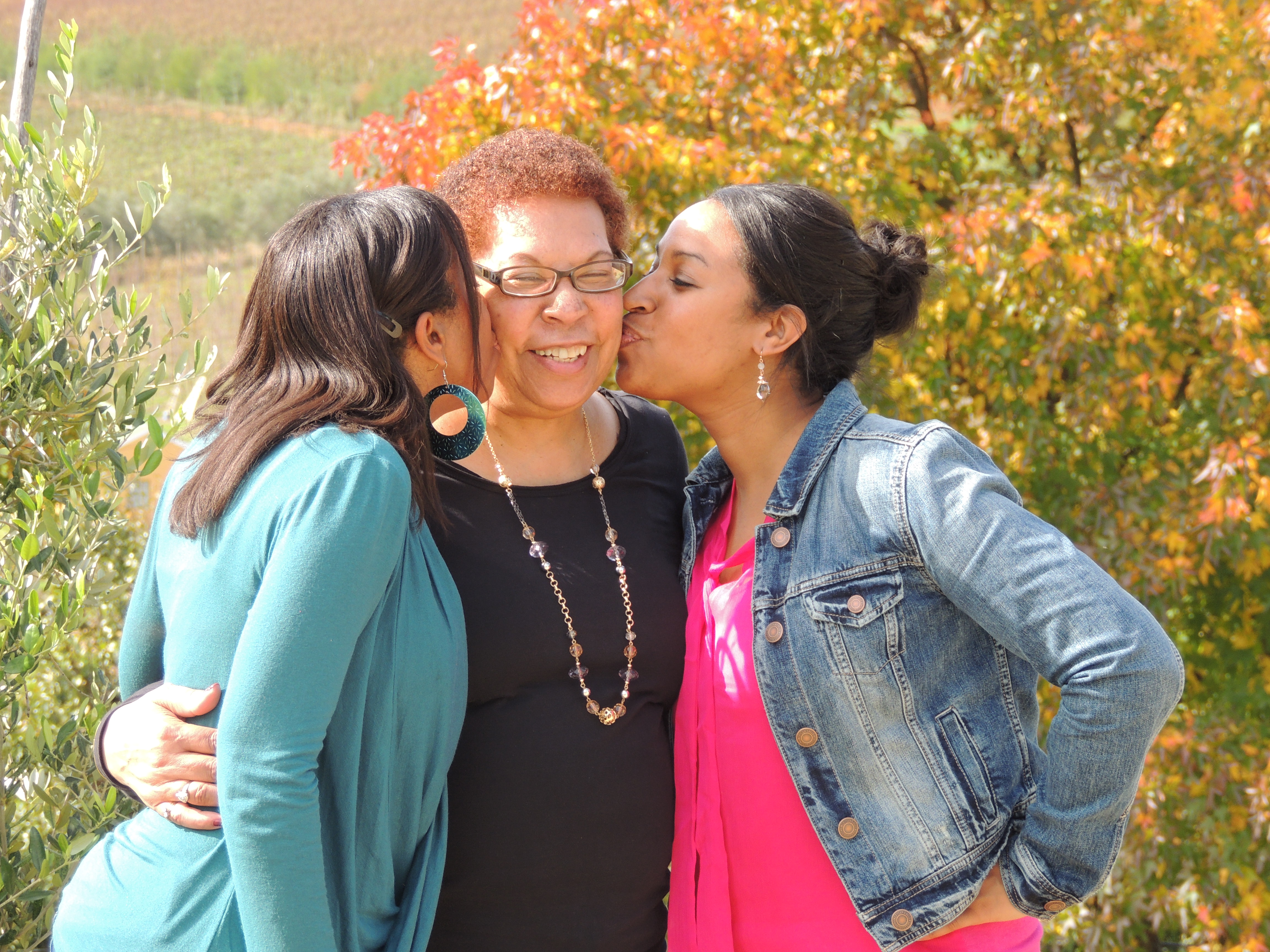
Kissing MommieMy happiest hello’s are when I see family members again—either on this side of the world or in the States. I’m so grateful for the two weeks that my mom and sister got to spend with me in Cape Town. I loved every minute of our time together, showing them around and giving them a taste of my world, especially since it was my sister’s first trip here.

I love meeting people through the trainings and programmes with which I am involved. It’s amazing how a sense of community can form within three days or six weeks, but these projects are always short-term; and we have to move on. And so we do, waiting for the next hello.

Election 2014

south-africa-flag1.jpgThis week, I’ll be experiencing my first election in South Africa. This will be the country’s fifth democratic election since 1994. Last week, 27 April—Freedom Day—marked 20 years of freedom in South Africa; 20 years ago the ANC won the national election, and Nelson Mandela became president.

It’s a special time to be living in South Africa. Yet an underlying feeling of pathos pervades the country. Everyone knows that President Zuma will be re-elected, but you would be hard-pressed to find a South African who is happy with this scandal-plagued president.

I shy away from writing posts about South African politics because it can be a slippery slope as a foreigner. However, I can’t be apolitical or ignore the politics all around me.

Living abroad has given me a different perspective on American politics and politics in general. For Americans, I think we need to thank God every day for the person living in the White House—whether a George Bush or a Barak Obama. At the end of the day, democracy still reigns, and our marvelous system of checks and balances keeps things in order. We have so much for which to be thankful. You can see that clearly when you live abroad.

I also think that both of my countries are guilty of blind party loyalties. Whether you are a staunch Republican, Democrat, ANC supporter, or DA supporter, blind party loyalties are irresponsible, if not downright dangerous. We as citizens living in democratic countries need to wake up and stop being so lazy. We need to think for ourselves and not just vote for a party because we have always voted for Party X or because Party Y liberated us from an oppressive regime. Overtime, parties change; history clearly shows that. We need to stop being so lazy and look into the facts and party platform and start thinking about the consequences—intended or not—of proposed policies so that we can make an informed decision instead of giving in to sound-bites or falling prey to faulty promises.


Back to School

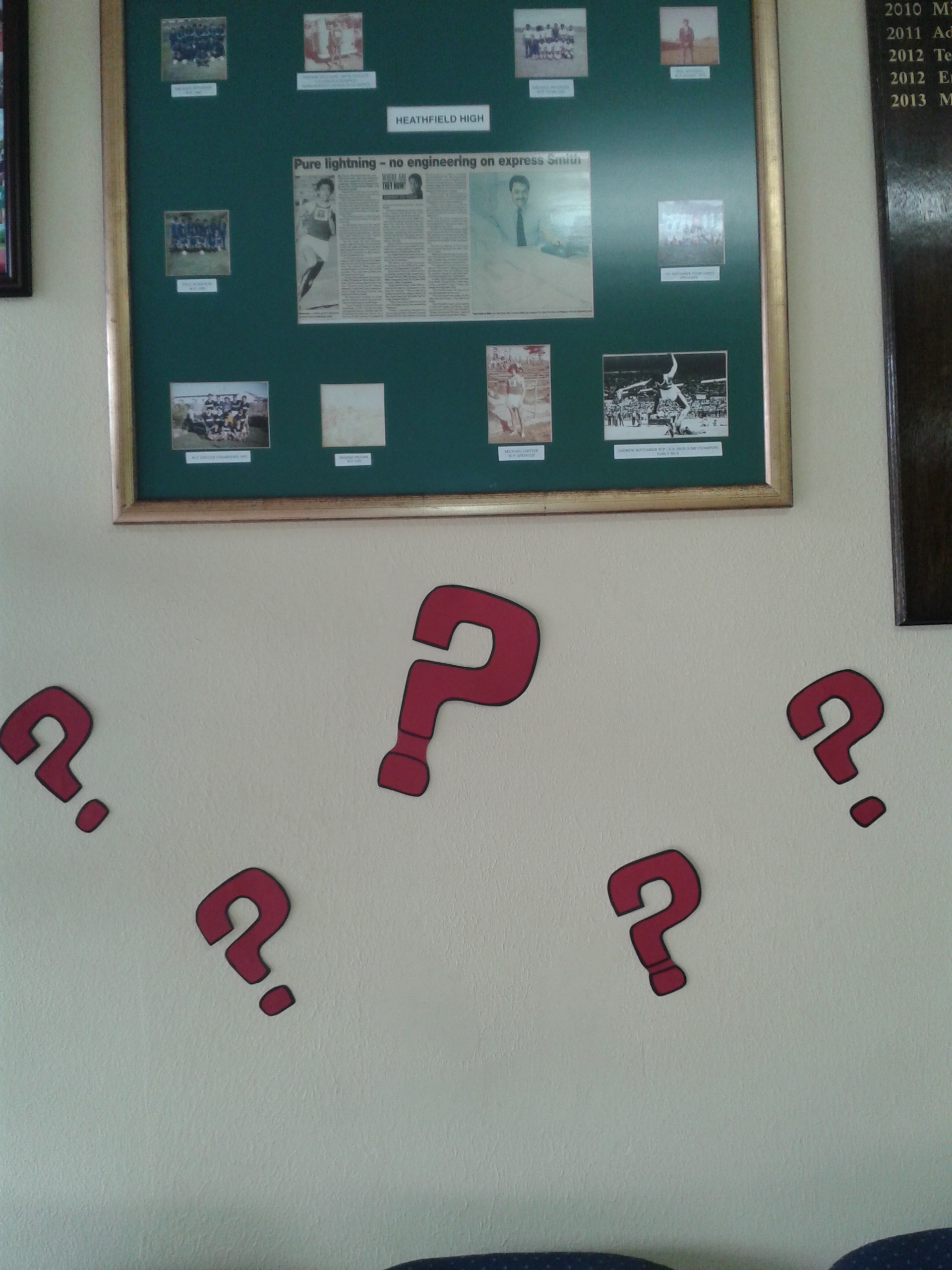
Got questions? Search for answers--our marketing campaign at the school. We posted red question marks throughout the school.
“Got questions? Search for answers”–our marketing campaign at the school. We posted red question marks throughout the school.

Tomorrow, I will begin working at a local high school for the next six weeks. I have been coordinating a Youth Alpha course for the students, and the course kicks off tomorrow afternoon.

The high school isn’t far from where I live. It’s located in what we Americans would call a “working class” neighbourhood, but most of the students come from the townships. Many come from extremely disadvantaged communities, riddled by gang violence, substance abuse, and impoverished conditions. The school has 900 students, 25 teachers, one principal, and a handful of support staff. In an American city, I think such a school wouldn’t exist because of the lack of staffing.

Yet, despite the school’s being under-resourced, you don’t get the feeling of hopelessness20140326_085330 you often sense when you visit an American inner-city school. You don’t have to go through airport-like security to enter the school, graffiti isn’t on the walls, and the students are very respectful. You can tell that the teachers truly care about their students and are trying their best to provide them with quality education. I feel so uplifted every time I visit the school. Attending some classes—English, Afrikaans, and maths— at the high school, in order to get a better feel for the school, has been one of the highlights of my year.

Months ago, the principal of the high school approached Growing the Church with a request for help. In his words, he felt like the school was meeting the academic needs of the students but not their spiritual needs. (Wow—can you imagine this happening in an American school?) At the end of last year, I started to put together a team from local churches, and we decided the best place to start was with the Youth Alpha course.

20140326_084225Please pray for us. Please pray for the students, the facilitators, and the caterer for the course. We are stepping out on faith, as we only have a little funding for the course; but we know that the Lord will provide. Please pray that hearts will be opened to the movement of the Holy Spirit.

I’m excited about this opportunity to serve the students at the school. I know that many lives are going to be changed, including my own.

Cathy

Two and a half years ago when we first met, I don’t think the two of us ever dreamed we would be working together in the same community. Worlds and countries apart, we two friends are now working together for the Anglican Church of Southern Africa, my friend Cathy for Anglican Aids and I for Growing the Church.

tres amigas
Tres Amigas–Cathy, Lindsey, and me: Lindsey just returned to the States, and we miss her already.

When I started taking some of the first steps to move to South Africa, I kept hearing from my church friends, “You have to meet this lady named Cathy. She’s from Cape Town.” I kept hearing all of these wonderful things about her. When our paths finally crossed at St. George’s, I felt like we were kindred spirits; it was instant friendship.

It was such a blessing to get to know Cathy while she was studying in Nashville. I loved sharing my city with her. She got to meet my family. We had a ball and our friendship grew. She was a huge help as I prepared to move to Cape Town. She and her family welcomed me with opened arms. Cathy has helped me tremendously as I have adapted to my new life here. Her family and two more families, friends of hers, have become my family on the other side of False Bay.

Last week, Cathy joined us at the Braehead community to become the programmes director of Anglicans Aids. We were like two school girls, thrilled to be working together in the same community. It’s like being in class with your best friend.

God knows no distance and is not bound by nations’ boundaries. It’s amazing how God can literally bring people together from halfway across the world.


Giving Up Stress for Lent

On the way to our church’s Ash Wednesday service, I was whinging about some issues and problems of the week that were stressing me out, when my friend humoursly said, ”So, are you giving up stress for Lent?” “Yes,” I flippantly remarked. And then, after a couple of seconds, I seriously responded, “Yes, I’m going to give up stress for Lent.”

At the Ash Wednesday service, when we sung one of my favourite hymns, “Dear Lord and Father of Mankind,” this stanza struck me:

Drop thy still dews of quietness,
till all our strivings cease;
take from our souls the strain and stress,
and let our ordered lives confess
the beauty of thy peace.

Yep, I thought to myself, I’m giving up stress for Lent.

I’m the first to admit that I’m not sure how far I will get with this practice, but I will give it my best shot. I know God has been dealing with me for years about the way I handle stress. I know that stress is a part of life. Whether or not I’m living in Cape Town or Nashville, there will be elements of stress from time to time. Sometimes, there will be a lot of stress!

But I’m going to try to curb my stress load by practicing these steps when something is starting to cause stress in my life:

  1. Say a quick prayer: God help!
  2. Ask myself: What can I control about this situation? If nothing, I will pray for the strength and ability to hand over this situation to God. If there are areas of the situation I can control, I will start making a plan to control
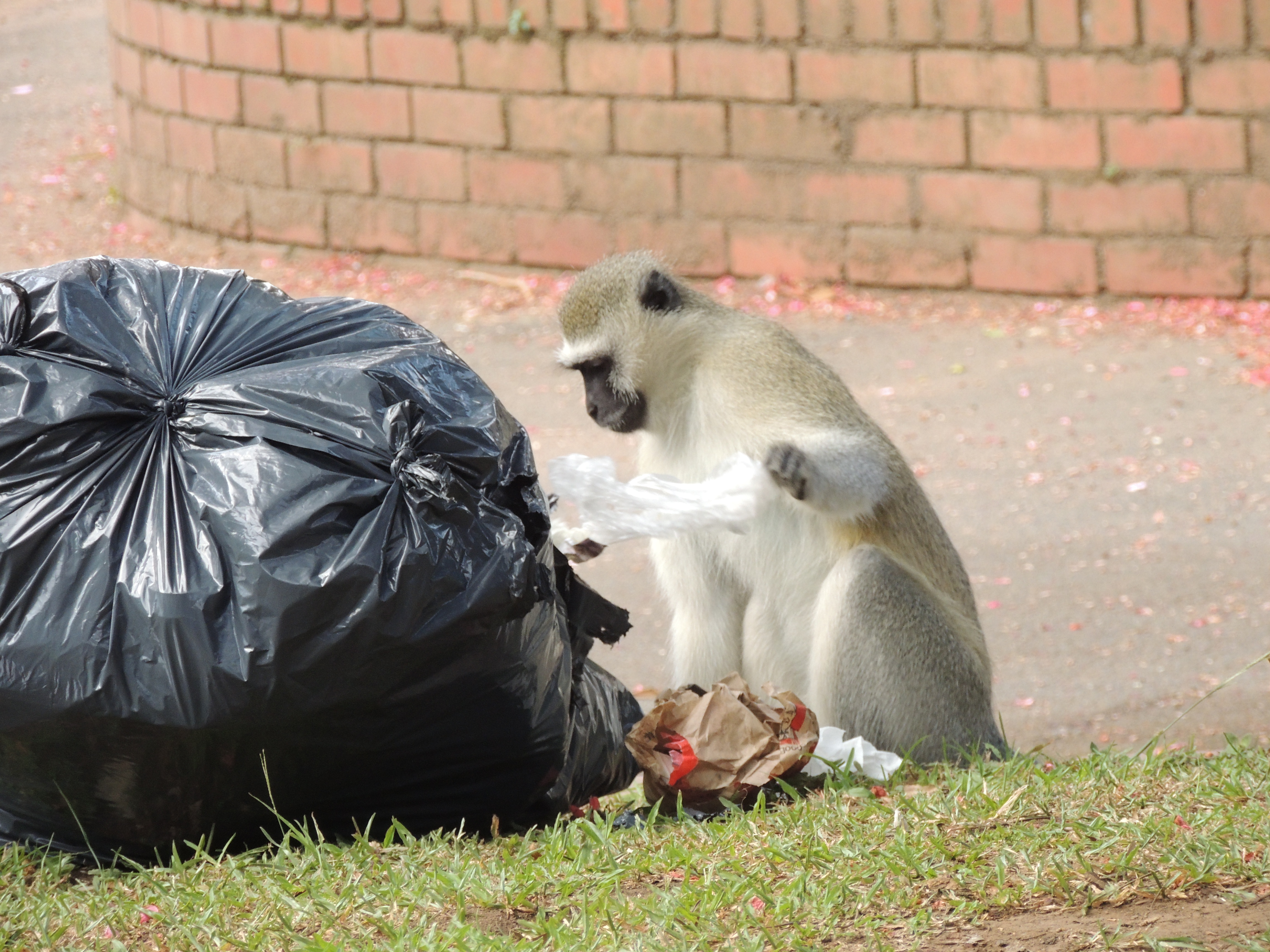
    this little fellow knows how to make a plan
    this little fellow knows how to make a plan

    them, starting with baby action steps.

  3. Pray, pray, pray—asking God for peace and guidance and wisdom, regardless of whether or not it is a situation I can control.

This may be a simplistic approach, but I’m going to try it. It’s a start. Lent is a time of growing closer to God, and often we give up something or take on a spiritual discipline in order to grow in our faith. I’m giving up the “strain and stress,” and I’m giving it to God so that my “ordered life” can confess and receive the “beauty of God’s peace.” God can sort out the stressors in my life, as he assures us in 1 Peter 5:7 (NIV), “Cast all your anxiety on him because he cares for you.”

You can listen to “Dear Lord and Father of Mankind” at
http://grooveshark.com/s/Dear+Lord+and+Father+Of+Mankind/58uBxB?src=5

Developing Rhythm (sort of)

No, I still haven’t learned how to dance. That’s coming—one of these days!

I have been back in Cape Town for a little more than six weeks; and in those six weeks, I have taught at three conferences, worked on various projects, and done my day-to-day work. I’m feeling a bit tired but not as frantic and exhausted as I would normally feel after being on such a hectic schedule.

cup of morning joe
cup of morning joe

I’m trying really hard to develop a healthy rhythm of work and play and rest this year; and although I have been struggling of late, I already see fruit budding from my attempts. I’m not a morning person, so having quiet time before work is not really an option for me. (I’m just being honest.) For years, thanks to some handy apps, I have been listening to scripture or the office of Morning Prayer while I have been getting ready in the morning. My mind often wanders during the readings, but I know God’s Word is sinking in despite my short attention span. However, I felt like I needed to develop a new practice, and I wanted to start the day off with scripture and prayer before I got out of bed. (Naturally, I keep my alarm on just in case I drift off to sleep!) I read the gospel or epistle reading of the lectionary and offer to God the day and pray for blessings and protection for those I love. The practice only takes three to five minutes, but I feel like it is making a significant difference in my life.

In addition to my new morning routine, I’m reading more (yay!) and going to the gym regularly. My work schedule is relentless until mid-July, so I need your prayers for discipline to keep developing a healthy rhythm.